2018年7月29日星期日

7 best foods for a healthy heart

"/

As a result of the fast past of our modern lifestyles, fast food has become the quickest and easiest option to avail. Junk food is harmful to our health and could lead to various issues like cardiac problems. There are several foods that strengthen our hearts which should be consumed regularly.
7 foods for a healthy heart:
1. Salmon
Salmon is an easily consumable seafood since it has omega-3-fatty acids, with anticlotting properties that help with blood circulation.  This helps in maintaining healthy cholesterol levels. 
2. Walnuts
Walnuts are also enriched in omega-3-fatty acids, which is unlike those found in fish. Walnuts can also reduce cholesterol levels, taking good care of the heart.
3. Almonds
Almonds are another rich source of omega-3 fatty acids and it can be used as an alternative to walnuts since it has less of a bitter taste.
4. Blueberries
Blueberries are full of flavonoids and resveratrol which are great for preventing heart diseases.
5. Potatoes
Potatoes are rich in fiber which helps in reducing the risk of heart disease. They can also reduce blood pressure since they are rich in potassium. However, their health benefits depend greatly in how they are prepared.
6. Turmeric
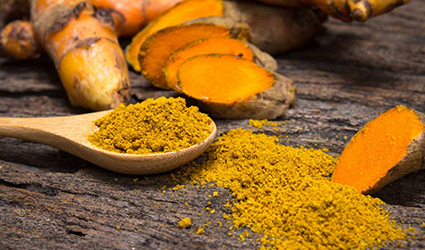
Turmeric consists of curcumin which lowers inflammation that occurs due to arteriosclerosis, a condition where arterial walls become hard and thick.
7. Dark Chocolate
Dark chocolates are rich in flavanols which lowers blood pressure and prevents blood clots from forming. Its antioxidant property can also reduce cholesterol levels. 
The post 7 best foods for a healthy heart appeared first on Drugdu.com
from Drugdu  https://goo.gl/QgQoHk

Monoclonal Antibody Delays Cognitive Decline, Erases Alzheimer’s Plaques in Phase 2 Trial

"/

A phase 2 study on BAN2401, a monoclonal antibody that hits soluble amyloid beta oligomers, showed that it limits cognitive decline in patients with slight cognitive injury or premature Alzheimer’s dementia on two scales and removed brain amyloid in 81% of patients in the trial.
The majority of subjects receiving the top dose [10 mg/kg intravenously, biweekly] went from being amyloid positive to amyloid negative,” by the closure of the 18-month study, Lynn Kramer, MD, said at the Alzheimer’s Association International Conference.
BAN2401, at 10mg/kg, retarded cognitive decline by 30% compared to placebo on the Alzheimer’s Disease Composite Score (ADCOMS), a new measure designed and propagated by Eisai. Moreover, the antibody also showed a notable statistical score on the Alzheimer’s Disease Assessment Scale-cognitive subscale (ADAS-cog), slowing decline by 47%. Another assessment, the Clinical Dementia Rating Sum of Boxes (CDR-sb), presented a 26% reduction, being statistically insignificant.
Marked changes were also noted in cerebrospinal fluid amyloid beta and total tau, said Dr. Kramer, chief medical officer of Eisai’s neurology division.
In our opinion, we have fairly conclusive results,” he said at a press briefing. “We view this as robust enough to approach regulatory authorities [around the world] and discuss the next steps with them, and what we need to do to register this product.”
Dr. Kramer said that Eisai might try to attain FDA breakthrough therapy status apart from planning bigger, lengthier phase 3 trials.
from Drugdu  https://goo.gl/QgQoHk

Fatty Diet and Liver Function Impact Risk of Alzheimers

"/

Risk of Alzheimer's disease increases with reduction in levels of plasmalogens, a class of lipids produced by the liver that constitute cell membranes in the brain, confirms new research presented at the Alzheimer's Association International Conference (AAIC) 2018 by Mitchel A. Kling, MD, an associate professor of Psychiatry in the Perelman School of Medicine at the University of Pennsylvania and the Veterans Affairs Medical Center.
Kling, and the multi-institutional Alzheimer's Disease Metabolomics Consortium headed by Rima F. Kaddurah-Daouk, PhD, at Duke University School of Medicine, worked on three indices for calculating the amount of plasmalogens associated with cognition, to check whether decreased values in the bloodstream are related to a higher risk of Alzheimer's disease, mild cognitive impairment (MCI), on the whole cognitive function, and/or other biomarkers of neurodegeneration in Alzheimer's disease. The three indices that were measured: the ratios of plasmalogens to each other; the ratios of plasmalogens to their closely-related, more conventional lipid counterparts; and a combination of these two quantities.
The team found that lower levels of the indices were linked with a higher risk of Alzheimer's disease. MCI and CN associations showed a similar picture. Moreover, some of the reduced plasmalogen levels were concurrent with increased levels of the tau protein in the brain, a biomarker of Alzheimer's disease.
"This research shows that an age-related deficiency of plasmalogens could lead to an increased risk of Alzheimer's disease because the liver cannot make enough of them," said Kling, who is also a fellow of the Institute on Aging.
from Drugdu  https://goo.gl/QgQoHk

2018年7月25日星期三

5 Harmful Effects of Junk Food on Children


Burgers, chocolates, pizzas, colas – the list of fast food consumption seems endless. It is not an issue if consumed once in a while. But when it becomes a regular habit and is left unchecked, it can lead to varied harmful effects, especially in children. Moderation is the key factor and a healthy home-cooked diet is an ultimate ideal.
We have listed the top 5 most harmful effects of fast food on children:

1. Lower academic improvement: This is a major concern for parents across the globe. Research was conducted by Ohio state university covering around 12,000 students to find a link between fast food consumption frequency and academic achievements. Students who had fast food every day were slower at reading and solving math problems and science, compared to non-junk food eaters.

2. Obesity and other disorders: This is the most common disorder which occurs due to junk food packed with excessive sugar, carbohydrates, sodium and saturated fats. Obese children are susceptible to heart diseases, respiratory disorders, diabetes, and digestive problems.

3. Bone health: Recent research has shown that over-consumption of fast food leads to poor bone health in young children.

4. Poor skin: Numerous subjective reports and independent research by practitioners have revealed that when junk food is strictly eliminated, there is a significant improvement in skin related issues such as acne and rosacea.

5. Hyperactivity: Due to the high sugar content, fast food has been linked to hyperactivity and attention deficit disorder in children. Hyperactivity occurs due to the artificial rush generated by sugar in the body. When it crashes, it leads to mood-related and concentration issues.


from Drugdu  https://goo.gl/QgQoHk

Curcumin in Turmeric can Treat Glaucoma

"/

Glaucoma is an eye disorder causing irreversible blindness and affects around 60 million people throughout the world. This condition leads to the loss of retinal ganglion cells, located near the surface of the retina. The prime focus of glaucoma research is to put an end to the loss of these cells in the initial stages.
However, a recent study from UCL and Imperial College London suggests that a turmeric derivative named curcumin could be used in eye drops to treat the early stages of glaucoma.
Professor Francesca Cordeiro, the lead author from the UCL Institute of Ophthalmology, Western Eye Hospital and Imperial College London said, "Curcumin is an exciting compound that has shown promise at detecting and treating the neurodegeneration implicated in numerous eye and brain conditions from glaucoma to Alzheimer's disease, so being able to administer it easily in eye drops may end up helping millions of people."
Dr. Ben Davis, the co-lead author from UCL Institute of Ophthalmology and Imperial College London said,"We are now researching diagnostic uses for these eye drops alongside other ways to visualize the retina, as eye tests can be an opportunity to detect signs of neurodegeneration with a simple, non-invasive test."
Professor Cordeiro added, "As we live longer, diseases such as glaucoma and Alzheimer's are steadily increasing. We believe our findings could make a major contribution to helping the lives of people affected by these devastating diseases."
from Drugdu  https://goo.gl/QgQoHk